Kilimanjaro Airport Transfers : At Serengeti Trips Tanzania, we offer professional transfer services with 4×4 vehicles to ensure a safe, comfortable, and reliable journey across all Tanzania National Parks and Cities. Whether you need airport transfers, safari transport, or corporate travel, our expert drivers and well-maintained fleet guarantee a smooth experience.
When to Use Our Transfer Vehicles
Airport Transfers
Arrive stress-free with our efficient airport transfer services. Our drivers will greet you on arrival, assist with your luggage, and provide a seamless transition to your destination.Safari Transfers & Private Game Drives
Enjoy the best of Tanzania’s national parks in our specially equipped 4×4 safari vehicles. Our expert drivers navigate all terrains, ensuring a safe and immersive wildlife experience.Corporate & Business Travel
Impress clients or ensure efficient transport for your team with our executive transfer services. Our reliable and professional drivers will get you to meetings, events, or conferences on time
Ngorongoro Conservation area
What makes Ngorongoro Crater Safari special ?
The Ngorongoro Crater is often referred to as “Africa’s Garden of Eden.” The crater is about 600 meters deep and spans roughly 260 square kilometers, creating a natural enclosure where wildlife thrives.
Unlike many other safari parks where animals migrate across large territories, the crater provides a permanent habitat with water, grasslands, forests, and a soda lake.
Because of this ecological balance, it is one of the most reliable safari destinations for seeing wildlife up close.
Visitors commonly see:
- Lions resting in open grasslands
- Massive bull elephants in the forest areas
- Large herds of wildebeest and zebras
- Rare black rhinos
- Flamingos around Lake Magadi
The area is also part of the UNESCO World Heritage Site, making it one of the most protected wildlife regions in Africa.
Wildlife You Can See in Ngorongoro Crater
One of the biggest reasons travelers visit the crater is the incredible density of wildlife.
Big Five Animals
The Ngorongoro Crater is one of the few places in Africa where you can see all Big Five animals in a single day.
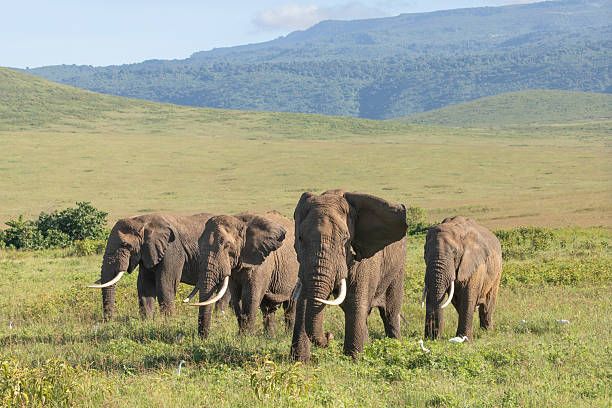
These include:
- Lion
- Elephant
- Leopard
- Buffalo
- Black Rhino
The endangered black rhino is particularly special here, as the crater provides one of the safest habitats for this rare species.
Other Animals
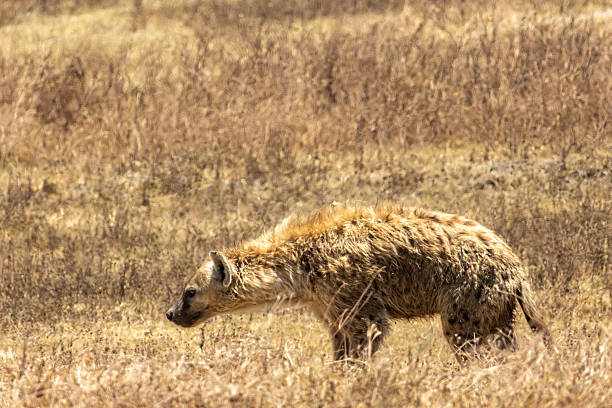
Visitors can also see:
- Cheetahs
- Hyenas
- Jackals
- Wildebeests
- Zebras
- Hippos
- Gazelles
Bird lovers will enjoy over 500 species of birds, including flamingos and crowned cranes.
Ngorongoro Crater VS Serengeti Safari
Many travelers wonder whether they should visit Ngorongoro or Serengeti. In reality, the best safari combines both.
| Feature | Ngorongoro Crater | Serengeti |
|---|---|---|
| Landscape | Volcanic crater ecosystem | Vast open savannah |
| Wildlife density | Extremely high | High but spread out |
| Safari duration | Often one day | Multiple days |
| Famous for | Big Five sightings | Great Migration |
| Size | Small and compact | Very large |
Both parks are part of Tanzania’s famous Northern Safari Circuit.
Safari Experience: What a Typical Day Looks Like
A typical Ngorongoro Crater safari begins very early in the morning.
Morning
- Breakfast at lodge near the crater rim
- Early descent into the crater
- Game drives through grasslands and forests
Midday
- Picnic lunch near hippo pools
- Continued wildlife viewing
Afternoon
- Final game drive
- Return to the crater rim
Because the crater is compact, you can see many animals within a few hours.
Ngorongoro Safari and What to Expect
The cost of a safari depends on several factors:
- Number of days
- Accommodation level
- Private vs group safari
- Time of travel
Typical Ngorongoro safari costs include:
- Park entrance fees
- Crater vehicle descent fees
- Safari guide
- Accommodation
- Meals
Booking with a local operator like JoyTrekking Tours & Safaris often provides better value compared to international booking platforms.
How To Get to Ngorongoro Crater
Most people visit the Ngorongoro Crater as part of a Northern circuit safari. Conveniently, Ngorongoro lies en route to Serengeti National Park and is only a 3-hour drive* (180km/112mi) on tarred road from the town of Arusha, which is the starting point of all safaris in northern Tanzania.
From Arusha, you can hop around the parks of the Northern circuit by small aircraft on chartered or scheduled flights. Alternatively, you can drive and do the whole circuit, or parts of it, by safari vehicle. A popular option is to fly into Serengeti and make your way back by safari vehicle via the Ngorongoro Crater, or the other way around. In most cases, your tour operator will pick you up from the airport and make all further arrangements for you.
Coming from the Seronera area in Serengeti, the distance to the crater is about 140km/90mi and the driving time is about 3 hours*. This can obviously take much longer allowing for wildlife viewing along the way. The 80km/50mi drive from Lake Manyara National Park to the crater takes about 2 hours*, and the 180km/110mi drive from Tarangire National Park takes about 4 hours*.
The best option to get to Arusha is to fly into Kilimanjaro International Airport (JRO), which is situated about 50km/31mi from Arusha. It is also possible to fly into Julius Nyerere International Airport (DAR) in Dar es Salaam and fly on to Arusha Airport (ARK) or Kilimanjaro International Airport (JRO).
Ngorongoro trips/safari Options
Ngorongoro trips / safaris by areas
Ngorongoro Crater
The Ngorongoro Crater is a breathtakingly beautiful setting and the best place in East Africa to see the Big Five. It is a great way to start your African safari adventure. However, as one of the world’s most astonishing and renowned natural wonders, the Crater does get busy, and at times very busy.
Due to the crowds we recommend a two-night stay only here, then moving on to the Serengeti for a quieter, more private safari experience. Any Northern Tanzania Safari should ideally include a visit to Ngorongoro Crater: it is one of the most beautiful natural wildlife safari sites in the world and an exceptional place to interact with people from the Maasai tribe.
A visit to the Ngorongoro Crater is an experience of a lifetime. As the world’s only intact caldera, the crater is the top attraction of the 8,292km²/3,202mi² Ngorongoro Conservation Area. There are few places that have comparable wildlife densities. It is not unusual to see the Big Five in one day here. And all this is in the most amazing setting with a backdrop of the 600m-/1,968ft-high crater wall.
Olduvai Gorge
Olduvai Gorge is the place where the first human remains were found. It is a steep ravine located right between the Ngorongoro Crater and Serengeti National Park and it can be visited on your way to or from Serengeti. The ravine is 100 meters deep and 50 kilometers wide and it is one of the most famous archaeological locations in East Africa. Besides the remains of the earliest humans, hundreds of fossils (bones) were discovered here that date back millions of years.
Ndutu Plains
The Ndutu plains is an located in the Ngorongoro Conservation Area, on the outskirts of the Southern Serengeti plains. These plains are enriched with tremendous acacia trees, providing a panoramic view across Lake Ndutu and Masek at the other end. It is one of the best places in the Ngorongoro Conservation Area to spot predators and enjoy the stunning landscapes. Standing here means you’re in the midst of a calving ground for migratory wild animals, specifically the wildebeest migration. It is typically composed of vast swaths of short grassland, soda-lake Masek, marshes, and woodland vegetation that support both residents and migratory animals.
Empakaai Crater
The Empakaai crater is one of the multi-volcanic calderas in the Ngorongoro Conservation Area, probably with the highest rim of all and a beautiful lake that makes up more than 75% of its crater floor. Among the main attractions inside the crater is the large number of Flamingoes spotted around this Crater’s Lake coastline. The crater rests on the Ngorongoro highlands and is surrounded by steep-sided wooded cliffs of about 300m high, characterized by lush-green natural vegetation, wildlife, and a variety of bird species. The crater is almost 8 kilometers wide, yet about half of its floor is covered by a deep soda lake, home to flamingoes and other water birds.
Northern Highland forest reserve
The Northern Highland Forest Reserve (NHFR) is a thick forest with an abundance of attractions, including Endorro waterfalls, Elephant caves, flora and birds such as turaco, robin chat, bee-eater, honey guide, warbler, flycatcher, weaver, sunbird, buzzard, cuckoo, hornbill, bulbul, guinea fowl, to name a few. The common wild animals in the area include elephant, buffalo, leopard, hyena, duiker, waterbuck, baboon, blue monkey, bushbuck, duiker, bush pig and many more. It is an excellent place for nature walks, hiking, bird-watching, flora identification or research, and game viewing on foot.
Kilimanjaro Airport Transfers
- Contact Info
-
Gallery
- Call : +255717590565
- Write : info@bookings.tz
- Visit website
